Case Study
Pristine Rides —
Lead Gen Campaign
Pristine Rides is a mobile detailing marketplace connecting Seattle-area customers with trusted local detailers. I developed and managed a Google Ads lead generation campaign designed to reach customers actively searching for mobile detailing services. The project included campaign strategy, landing page development, conversion tracking, and ongoing optimization.
Project Overview
Three test phases. One campaign. Zero outside help.
I built and managed a Google Search campaign for Pristine Rides from the ground up — account and campaign setup, landing page design, conversion tracking, and ongoing performance analysis, working through each stage myself.
Along the way, I fixed a broken tracking setup, caught a methodology error in my own testing, and identified a Quality Score issue that was limiting ad performance. Across three phases, CTR improved from 4.5% to 5.5%.
- Google Ads account structure and campaign setup
- Keyword research and match type strategy
- Ad copy creation and testing
- Landing page design and development (Carrd → Webflow)
- Google Tag Manager implementation and container setup
- Conversion tracking setup, verification, and debugging
- Google Search Console configuration and sitemap submission
- PageSpeed and Core Web Vitals optimization
- Performance analysis and iterative optimization
- DNS and domain configuration via Namecheap
Key takeaway: Effective paid search isn't just about driving clicks — it's about building a system you can trust to measure, learn from, and improve over time.
Skills Demonstrated
Phase One
Launch — Establishing the Baseline
What I Did
Built and launched the first Google Search campaign targeting local mobile detailing searches in Seattle. The landing page was a funnel-style page built on Carrd, designed to move visitors quickly toward a lead form. Daily budget was set at $4/day to test campaign viability before scaling.
I structured the campaign around high-intent local keywords and wrote ad copy focused on convenience and trust — the two things someone searching for a mobile detailer cares about most.
Results
The campaign spent $110 and generated 599 impressions, 27 clicks, 4.5% CTR, and 5 leads. While the campaign produced early engagement, I identified a major measurement limitation: conversion tracking couldn't be fully configured on Carrd because of limitations around separate page URLs.
599
Impressions
27
Clicks
4.5%
CTR
5
Leads (Manual Count)
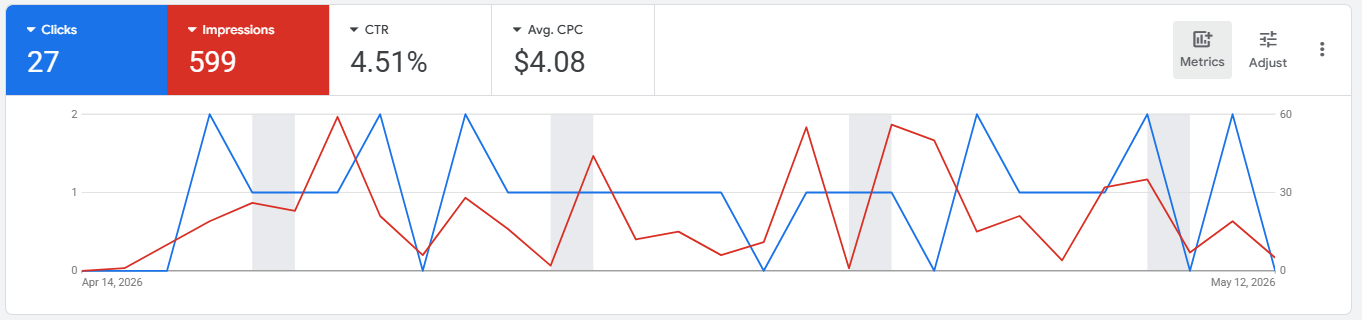
Google Ads dashboard, Phase 1 date range (Apr 14 – May 12, 2026).
* Tracked manually — no conversion infrastructure was in place during Phase 1. Corrected in Phase 2.
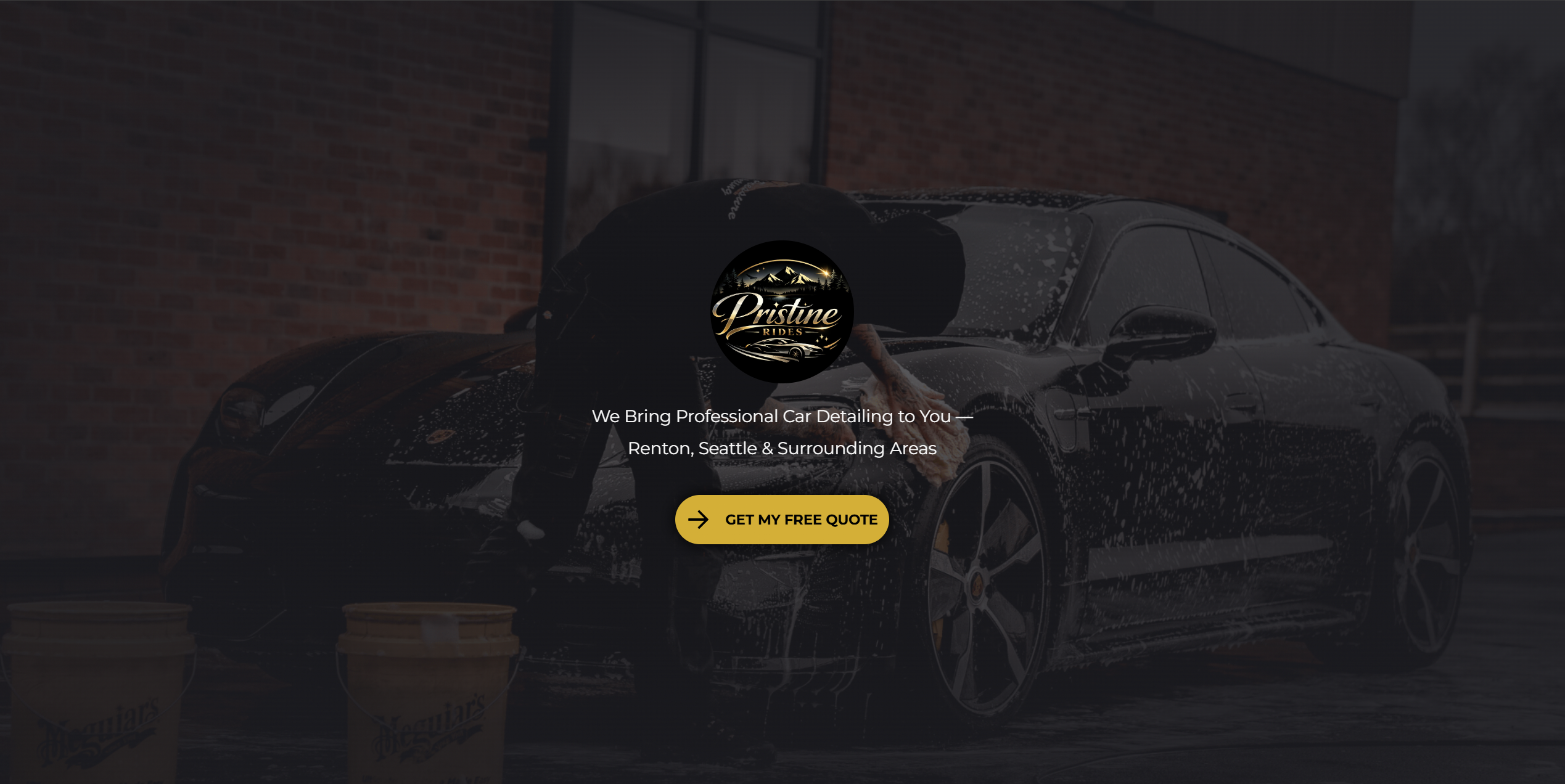
The Phase 1 Carrd landing page — funnel-style, single scroll to the "Get My Free Quote" CTA.
Key Learning
The campaign proved the concept — people were searching, clicking, and converting. The main constraint was tracking infrastructure: Carrd's single-page architecture made GTM-based conversion tracking unreliable. Phase 2 would need to be built on a platform that could support proper event tracking.
Phase Two
Iteration — Testing a New Approach
What I Did
Migrated the campaign from Carrd to Webflow and implemented end-to-end conversion tracking through GTM and Google Ads — establishing a reliable measurement foundation the campaign had been missing. Also added Microsoft Clarity to begin layering qualitative session data — heatmaps and recordings — on top of the quantitative tracking. The new landing page used a simplified layout with a hero section, lead form, and "how it works" explainer.
Simultaneously updated ad copy, removing underperforming variants and tightening the messaging. Daily budget was increased to $12/day midway through to accelerate data collection.
Results & Honest Reflection
CPL came in at ~$40. However, the most important finding from this phase wasn't the number itself: I changed two variables at once — landing page and ad copy — which meant I couldn't isolate which change drove the outcome. A proper test isolates one variable at a time. This is the methodology error Phase 3 was designed to fix.
556
Impressions
26
Clicks
4.7%
CTR
~$40
CPL
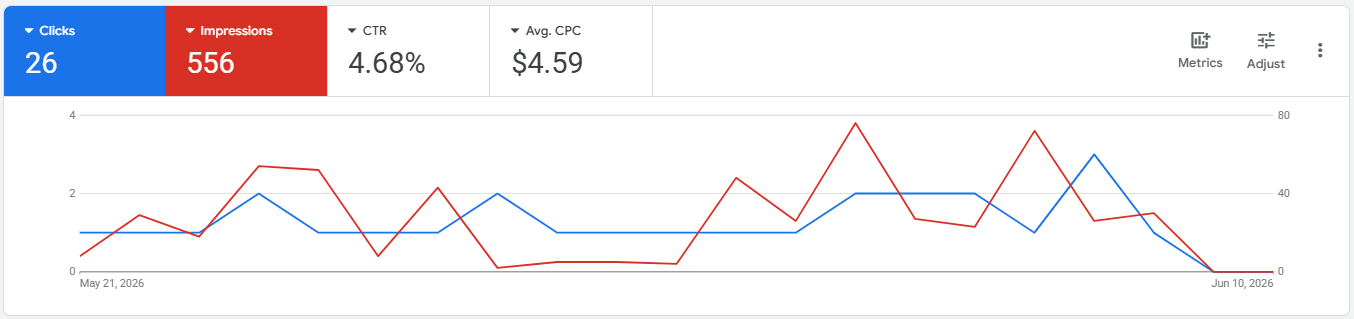
Google Ads dashboard, Phase 2 date range (May 21 – Jun 10, 2026).
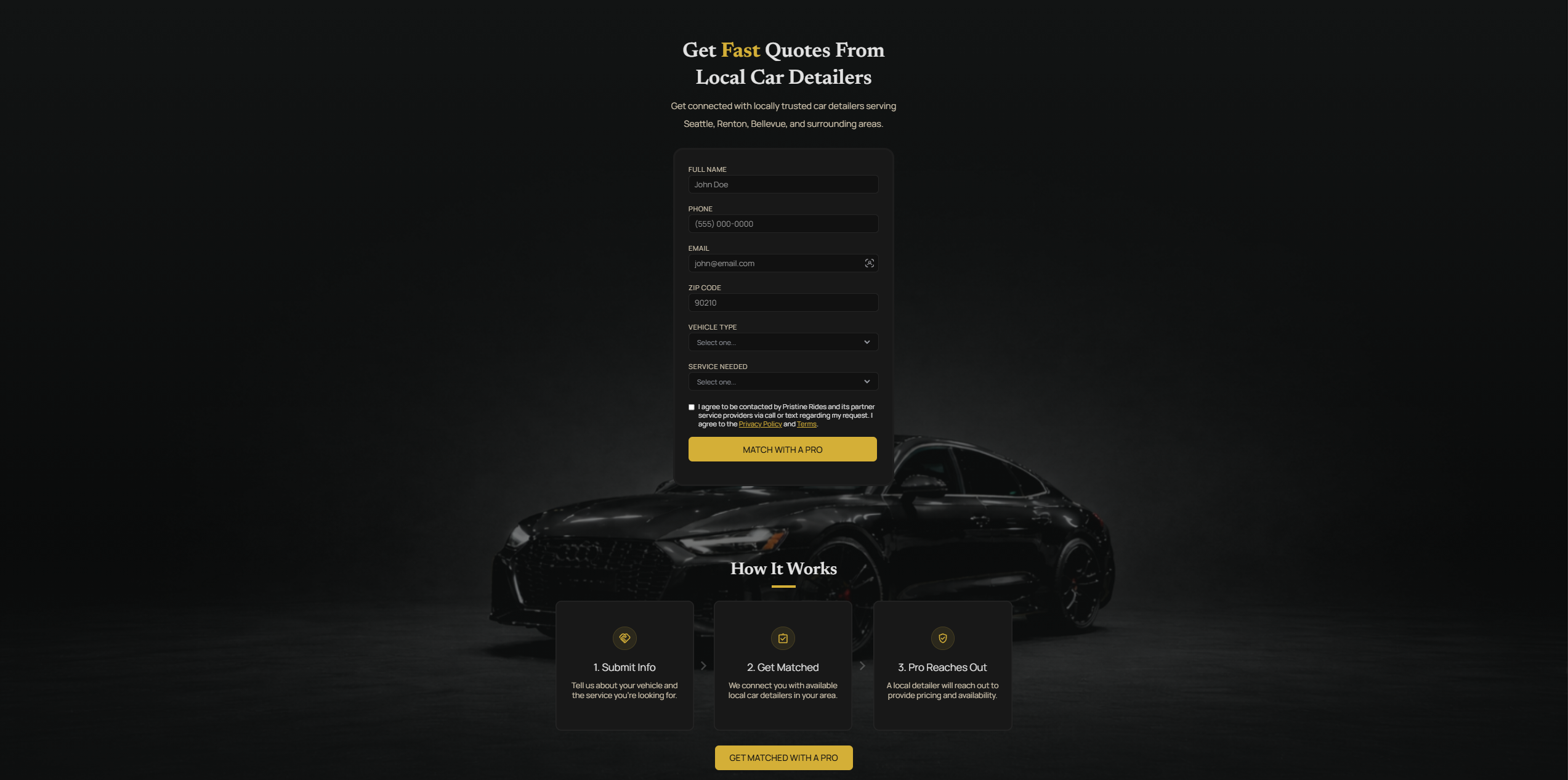
The Phase 2 Webflow landing page — hero, lead form, and "how it works" explainer.
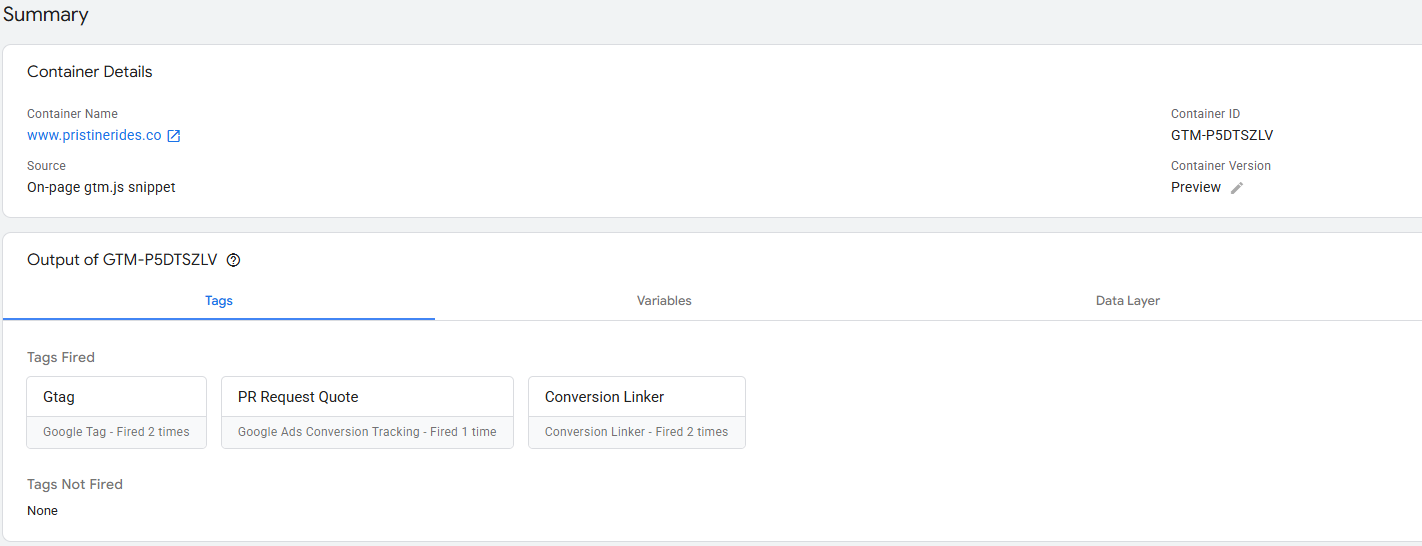
GTM preview mode verifying the Gtag, Google Ads conversion tag, and Conversion Linker all fire correctly.
Key Learning
CTR held steady across both phases (~4.5–4.7%), which suggests the ad copy wasn't the primary variable affecting performance. The landing page is the more likely driver — but without an isolated test, that's a hypothesis, not a conclusion. Both findings directly shaped the Phase 3 test design.
Phase Three
Clean Test — Isolating the Landing Page
The Principle Behind This Phase
Control the variables. Tracking was verified before a single dollar was spent. Ad copy was held constant to match Phase 2. A minimum click threshold was set before any conclusions would be drawn. Phase 3 is the test Phase 2 should have been.
The Setup
Built a new funnel-style landing page on Webflow with GTM conversion tracking verified before launch. Only one variable is changing — the landing page. Ad copy stays consistent with Phase 2 to create a clean comparison. Budget held at $12/day to maintain comparability.
Results
The isolated landing page test hit its click threshold, and CTR climbed to 5.5% — the highest of all three phases — confirming the landing page as the primary driver Phase 2 could only hypothesize about. But an unresolved historical issue surfaced alongside it: Quality Scores of 1–2/10 on core "near me" keywords capped Ad Rank and impression share for the entire test, regardless of landing page quality.
934
Impressions
51
Clicks
5.5%
CTR
5.9%
CVR
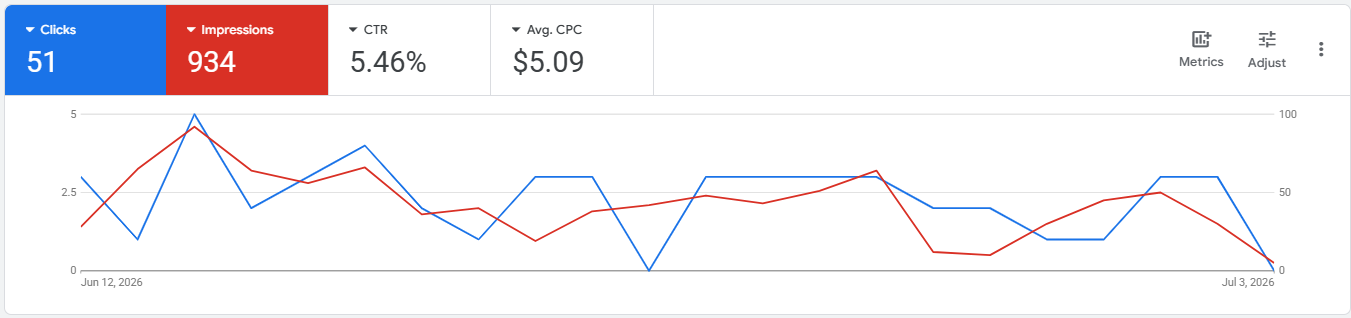
Google Ads dashboard, Phase 3 date range (Jun 12 – Jul 3, 2026).
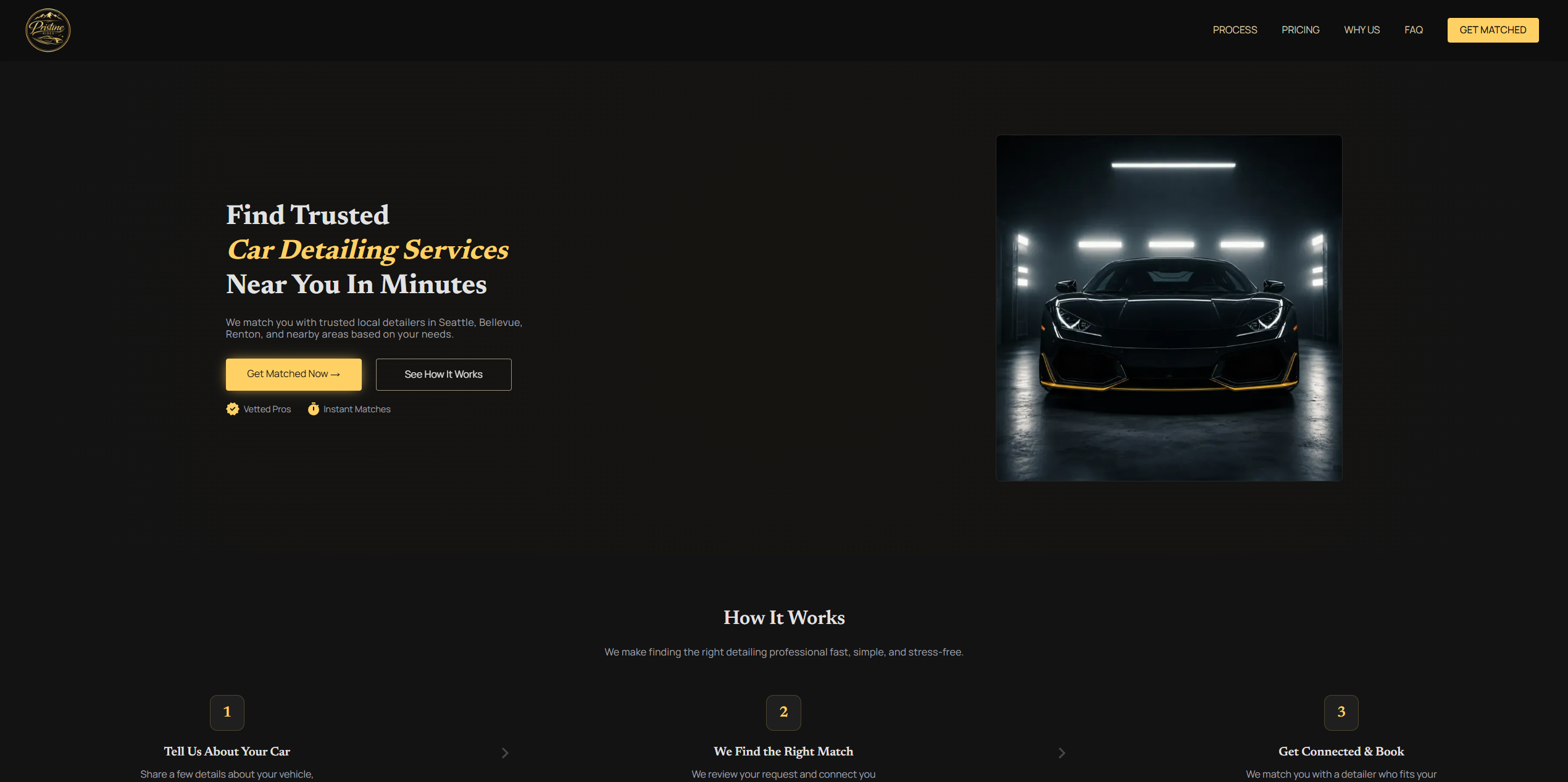
The Phase 3 landing page on pristinerides.co — the isolated variable this test measured.
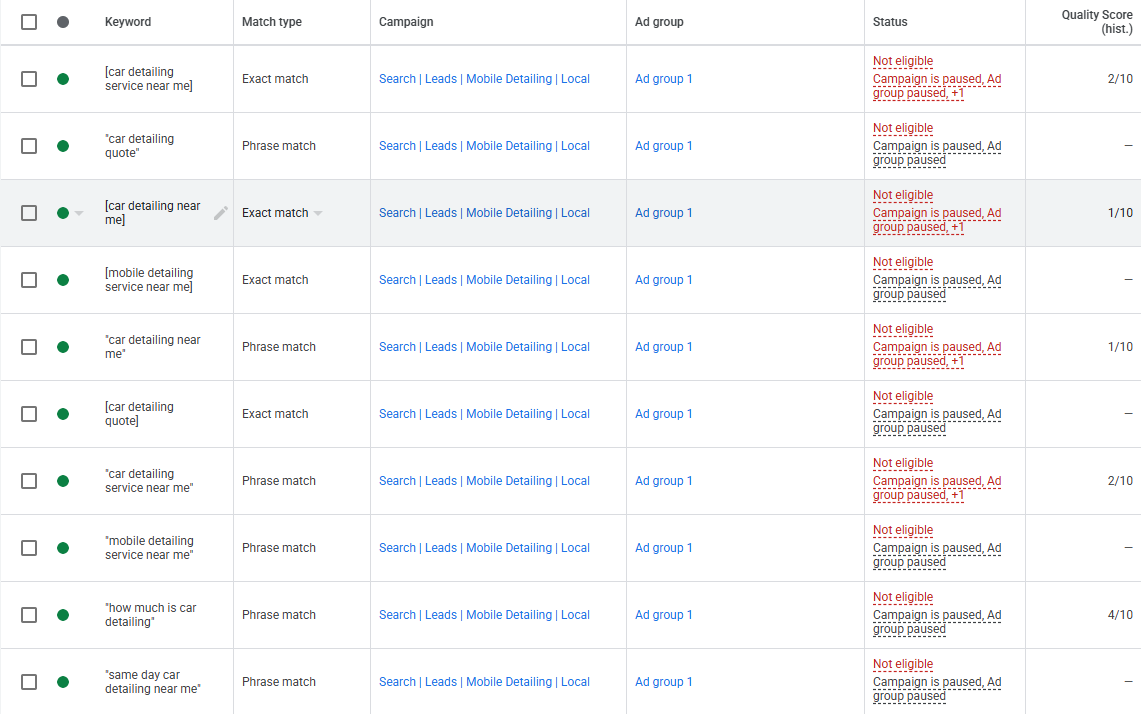
Quality Score column added to the keyword view — core "near me" terms scoring 1–2/10.
Key Learning
Isolating the landing page as the single variable worked exactly as intended — the CTR improvement confirmed it was the right lever, resolving the ambiguity Phase 2 left open. But Quality Score on "near me" keywords never recovered, even after positioning and copy fixes. All three phases ran under the same campaign, so Quality Score history carried forward rather than resetting — a landing page change can improve relevance signals, but it can't erase an account-level score built on prior performance. A true test of the positioning fix would have required a fresh campaign from the start, a structural constraint I identified too late to correct within this project.